- Call (914) 400-7558
- info@nativerootshealing.com
- Sign Up

No products in the cart.

Ancestral Bathing Herbs
Diaphoretic · Lymphatic · Restorative
A mantle is a cloak — the outermost thing, the layer that meets the world before you do.
The word carries three senses, and this bath is concerned with all of them. There is the mantle as garment: what covers and warms, what is thrown over the shoulders of someone who has come in from the cold. There is the mantle beneath the earth’s crust: the deep, slow, anchoring layer that holds everything above it in place. And there is the mantle as inheritance — the thing taken up from those who carried it before, passed hand to hand across generations.
To ward is to guard, but not to wall off. A ward is a watch kept, a boundary tended. In old usage it described both the act of protection and the person being protected. A hedge wards a field without sealing it; things pass through, but on the hedge’s terms.
Together they name the work: to restore the covering, and to tend the edge.
There is a layer of you that meets everything else. It is not quite the skin, and it is not quite separate from it.
In Chinese medicine this layer is called wei qi — defensive qi. The classical texts place it in the space between the skin and the flesh, and describe it in the language of clothing: something worn, something that can be thin or thick, intact or threadbare. Wei qi governs the opening and closing of the pores. It decides what enters and what is turned away. It is the body’s discrimination, exercised continuously and below thought.
When it is strong, a person is porous in the right way — open to warmth, closed to what does not belong to them. When it is depleted, the opposite happens on both counts. A person catches everything going around. They sweat at rest and chill in a draft. And in the register that has no clinical name but every practitioner recognizes: they walk into a room and walk out wearing everyone in it, unable to tell their own state from the ambient one.
Wei qi is governed by the Lung, and the Lung governs the skin. The Lung also houses the po — the corporeal soul, the part of us seated in the body and the senses rather than in the mind, and the part that carries grief. So the skin, the boundary, the breath, and the sorrow that settles in the chest after a hard season are not separate territories in this medicine. They are one territory, approached from different sides.
A bath meets that layer exactly where it lives. Not swallowed and routed through the liver, not applied to one patch and left — but held, entirely, at the surface, in warm water, for as long as it takes.
The second half of this bath is quieter.
Reishi’s Chinese name is líng zhī, 靈芝. Líng means numinous — efficacious in the sense of a thing that answers. It is the character used for oracles and for spirit-mediums. Zhī is the bracket fungus. “Spirit mushroom” is not decoration; it is the plain reading of the name.
In the Shennong Bencao Jing, the oldest surviving Chinese materia medica, the zhi fungi sit in the superior class — the medicines that nourish ming, one’s destiny or life-mandate, taken over years rather than reached for in a complaint. In Daoist iconography reishi is carried by the immortals. The head of the ruyi scepter, the sceptre of “as you wish,” is a stylised reishi cap.
What reishi does is anchor the shen. Shen is spirit, and it resides in the Heart. The picture reishi addresses is shen that will not settle: the person lying awake vibrating, alert long past the point of usefulness, spirit hovering somewhere above the body rather than seated inside it. Reishi does not sedate. It weights. It brings the spirit back down into the flesh it belongs to.
It is also a saprophyte — it grows on dying hardwood, feeding on what is on its way back into the ground. A threshold organism, working the seam between decay and return. That it belongs in a bath about boundaries is not a coincidence anyone arranged.
Nearly every tradition that keeps a healing practice also keeps a bathing practice, and they converge on the same use: water is the medium for work at the edge.
In northern New Mexico, where these herbs are blended, baños and limpias remain living practice — the bath as clearing, as restoration, as something done for a person rather than sold to them. Russian banya uses a birch venik, a bound bundle of leafed branches, struck against the skin in steam. The seaweed bathhouses of the Irish and Scottish coasts have soaked people in Fucus for rheumatism and skin conditions for centuries and still do. Japanese and Korean bathing lineages, Finnish sauna, the sweat traditions of this continent — different peoples, different cosmologies, the same recognition.
The reasons hold in more than one language. Heat opens the periphery and moves blood to the surface. Immersion shifts the nervous system out of vigilance — warmth and containment are read by the body as safety, without any belief required. Twenty minutes of sustained, whole-body contact is the longest uninterrupted attention most people give their own skin in a week.
And there is the part that is not mechanism. A bath is a threshold you cross deliberately. You undress, you enter, you are held, you come out. Anyone who has needed to become a different version of themselves before leaving the house knows why this is a ritual and not merely hygiene.
Pacific yew (Taxus brevifolia) — Among Northwest peoples including the Nuxalk (Bella Coola), Wuikinuxv (Oweekeno), Chehalis and Tsimshian, an infusion of the crushed leaves was used externally as a wash, to cause perspiration and bring about a general improvement in health; the crushed leaves were ground and applied as a poultice to wounds. Some tribes called the yew the Chief of the Forest. It is a slow-growing tree that rots from its own centre and keeps standing, so hollow that ring counts fail and its true age cannot be told. Here it is the diaphoretic and the guardian — the outermost herb in a bath about the outermost layer.
Birch bark (Betula spp.) — The bathing tree of the north, and the one herb in this blend whose traditional use is more external than internal. For aching joints, cold and stiffness, weathered skin. Betulin and the salicylate-bearing barks give it a real anti-inflammatory and analgesic action; a standardised birch bark triterpene extract now holds regulatory approval in Europe and the United States for wound healing.
Mugwort (Artemisia vulgaris) — The threshold plant, and the dream plant, in nearly every tradition that has one. Burned as moxa, hung at doorways, carried by travellers. Its bath and steam use across cultures is specifically associated with pelvic and postpartum work. Here it opens the surface alongside the birch and gives the blend its particular quality of quiet.
Red root (Ceanothus spp.) — The lymphatic of the American materia medica, and the one genuinely Southwestern plant in the blend. Michael Moore’s work established it in this region for boggy, congested tissue — for the interstitial spaces between the vessels and the lymphatics, where fluid stalls.
Bladderwrack (Fucus vesiculosus) — The tidal edge. Alginates and fucoidan make it emollient and film-forming on skin, which is the reason the seaweed bathhouses have outlasted every fashion in medicine since.
Astragalus (Astragalus membranaceus) — Huang qi, the great tonic of wei qi, and the herb this bath is built around. It has an external tradition of its own: sheng ji, “generating flesh,” used in classical formulas for chronic sores that will not close, to lift what is stagnant and rebuild tissue.
Reishi (Ganoderma lucidum) — For the shen, as above. Its water-soluble glucans also have a modest but real literature in skin-barrier support.
Cinquefoil (Potentilla spp.) — One of the old protective herbs of European folk practice, and a genuine astringent. It tones tissue that has gone slack or weepy, and its documented uses have always been washes rather than draughts.
Licorice root (Glycyrrhiza glabra) — The harmoniser. In Chinese formulary it appears more often than any other herb, mediating between the rest. Topically, glycyrrhetinic acid is anti-inflammatory on reactive skin.
Rosehips (Rosa canina) and lemon peel (Citrus limon) — Nutritive, aromatic, astringent. The finish, and the scent that rises with the steam.
Bring the blend to a simmer in about two quarts of water. Cover and simmer the roots and barks thirty to forty minutes. Remove from heat, add the leaf, fruit and seaweed, cover again, and let it stand until it has cooled enough to handle.
Strain through cloth and pour into a drawn bath. Soak twenty minutes in water that is comfortably hot, not scalding. Do not rinse afterward — pat dry, and let the herbs stay on you.
The tannins will tint a light-coloured tub and light towels. Rinse the tub while it is still wet.
Give yourself somewhere to go afterward that is not immediately back into the day.
For external use only. Not for internal use.
Not for use during pregnancy. Not for children. Do not use on broken skin. Patch test before full immersion. Not for use with thyroid disease without practitioner guidance. Consult your practitioner if you take pharmaceutical medications. Keep out of reach of children and animals, and do not leave prepared bathwater standing.
This preparation is a traditional botanical bath. It is not a treatment for any disease and is not a substitute for medical care.
Blended in small batches in Taos, New Mexico.
Native Roots · nativerootsschool.com · @native_roots_healing · info@nativerootshealing.com
| Weight | .25 lbs |
|---|---|
| Dimensions | 10 × 5 × 3 in |
Only logged in customers who have purchased this product may leave a review.
Bio:
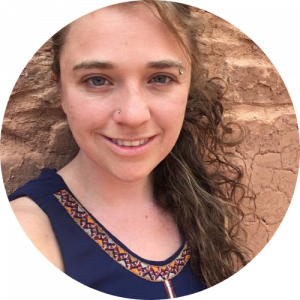
Morgaine Witriol is founder of the Native Roots School of Ancestral, Folk & Herbal Medicine in Taos, NM, a collective of 10 different teachers that teach each about their own ancestral healing modalities. Morgaine is a clinical herbalist, wild crafter, gardener, medicine maker and intuitive being in service to the plant and fungal folk. At her private practice in Taos, NM people can recieve a combination of clinical, spiritual and medical intuitive treatments including bodywork, herbal consults, somatic trauma release, repatterning and reconditioning intergenerational and ancestral wounds, lymphatic drainage, abdominal massage, and sound healing. Morgaine’s focus in her practice aside from trauma work is focused working with people that were diagnosed with cancer, diabetes, arthritis, depression or hard to treat chronic disease that western medicine is stumped by. At Native Roots, Morgaine teaches about reclaiming one’s own ancestral traditions as a displaced person, Jewish Folk Medicine, SW Materia Medica, Herbal Allies for Trauma & Grief, Ethics, Cultural Appropriation, Plant Energetics, Energywork, Clinical Herbalism, Flower Essences, Medicine Making and leads several multi-day field trips doing medicinal plant walks. Really she feels she teaches how to come into relationship with elemental, plant and fungal medicine, and then the indigenous science from all cultures of listening to the body and its layers of epigenetic, ancestral, childhood, organ, and energy center imbalances. Morgaine developed and ran educational programs accredited through the University of NM, has taught at the American Herbalist guild conference twice, UNM Albuquerque and is now teaching at Northern University on herbalism for the nursing department. Her favorite people to teach are doctors, nurses, children and teachers. She has led plant and mushroom walks for the New Mexico Association of Osteopathic Medicine, Flower Hill Institute, presented for Native Plant Society, and taught wellness through plant and mushroom medicine for Taos Municipal Schools Employees.
In 2010 Morgaine lived in Belize and had the opportunity to apprentice tropical medicine with one of the most revered medicine men in the country the late Don Heriberto Cocom for 1.5 years and with his good friend Don Reginaldo Chayeux in Guatemala. She brought groups down to study Mayan medicine, herbalism and abdominal massage with him for 7 years until creator called him home. She collaborated for 10 years with his Nonprofit Association to support the protection of the fully Mayan run rainforest Reserve Bio Itza and brings groups of students to study with him. Morgaine has recognized the importance of honoring healing modalities of all cultures and especially the ones of our own tradition even if they have been forgotten by a few generations.
Morgaine studied at the Northwest School for Botanical Studies, The Dandelion Center, California School for Herbal Studies, The Dhyanna Center, Blue Otter School, Acutonics Institute for Integrative Medicine, Ethnic Studies and Anthropology at the University of Colorado. She often attends herbal and mushroom conferences.
She grew up with an immigrant community and found herself easily honoring the elders that still remembered their own language, their own healing modalities and traditions from that community. It was a journey of many years before she started to look deeper into reclaiming the healing practices of the ancestral traditions that she came from and hopes to share with all people of European descent to remember to honor their own ancestors, to connect to the land and the people that are currently practicing and keeping the context of European tribal healing traditions alive today. She hopes to create a safe space to bridge the intergenerational gap of knowledge, cultural similarities and healing tools to encourage self healing and community healing.
Morgaine worked for Teambuilders counseling Services in 2008 in Taos, New Mexico as a Comprehensive Community Support Specialist teaching “life skills” including communication, stress and anger management, and parenting skills and offering social work opportunities for children and their parents. Later she worked at nonprofit Rocky Mountain Youth Corps with “at risk youth” doing hands-on experiential learning in nature focusing on useful life skills and training once a week for teens. Afterwards she ventured to Guatemala to volunteer at an orphanage and was responsible for 30 girls ages 10-17 as their live in caretaker and teacher for 5 months. in 2011 Morgaine found herself homebound and endured hurricane Sandy’s destruction leaving 13 million people on the East coast without electricity. She coordinated one thousand volunteers a day in Staten Island, New York and spent months doing grass roots disaster recovery with Feeding Family including immediate needs donations and distribution of water, food, respiratory masks, clothing, tho food, medications and animal rehoming, demolition, and later therapeutic urban gardening in elevated community garden beds, fundraising, and more demolition, raw sewage clean up and mold control.
Rates:
$225-375 sling scale for 1.5 hours, $300-500 for 2 hours
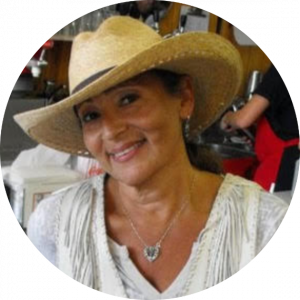
Miram’s sessions are intuitive. Her body and words are a vessel for divine healing and often she channels intuitively the heart medicine that supports one to create and develop their own healing. Miriam awakens the self worth, self value and realignment with ones higher self.
A combination of these services is provided in one session. Distance sessions and in person.
$150 deposit is quired in advance
Rates:
$225-375 sling scale for 1.5 hours, $300-500 for 2 hours
By-donation for all New Mexican heritage peoples

Reviews
There are no reviews yet.